
Medical Cannabis & Driving in the UK:
The 2026 Complete Legal Guide
A comprehensive analysis of patient rights, forensic THC standards, the landmark Sal Aziz acquittal, new NPCC police guidance, and what 90,000+ UK patients need to know.
The legal landscape governing the intersection of medicinal cannabis and road safety in the United Kingdom has entered a phase of critical re-evaluation as of early 2026. Since the landmark rescheduling of Cannabis-Based Products for Medicinal Use (CBPMs) in November 2018, the friction between the Road Traffic Act 1988 and the evolving clinical reality of thousands of patients has necessitated a standardised approach to enforcement.
For the first time since legalisation, police forces across England and Wales have been issued official national guidance designed to reconcile the statutory medical defence with roadside drug testing procedures — marking a shift toward a "patients-first" philosophy in law enforcement.
This transition occurs against a backdrop of high-profile legal challenges, such as the acquittal of Sal Aziz in February 2026, which has highlighted systemic failures in how the Crown Prosecution Service (CPS) and police officers interpret medical prescriptions and the pharmacokinetics of Delta-9-Tetrahydrocannabinol (THC).
Key Facts
- 90,000+ UK medical cannabis patients
- THC limit: 2µg/L blood (Section 5A)
- Medical defence exists under Section 5A(3)
- New NPCC 12-page guidance Jan 2026
- Sal Aziz acquitted Feb 10, 2026
Still a Risk
- Section 4 (impaired driving) — no medical defence
- Inconsistent officer training
- Saliva tests cannot verify prescriptions
The Statutory Medical Defence & Road Traffic Act 1988
At the core of the current legal debate is Section 5A of the Road Traffic Act 1988, which creates an offence for driving with a specified controlled drug in the body above a set limit. For THC, the limit is currently set at a "zero-tolerance" threshold of 2µg/L (microgrammes per litre) of blood — a level intended to rule out claims of accidental exposure.
However, Section 5A(3) provides a critical safeguard: a statutory medical defence for individuals who have been prescribed the substance for medical or dental reasons and have taken it in accordance with the directions of a healthcare professional. This defence is not a "right to drive impaired," but rather a protection against the arbitrary threshold of the 2µg/L limit, which most daily medical users will inevitably exceed due to the lipophilic nature of cannabinoids.
The legal distinction between Section 4 (driving while unfit through drugs) and Section 5A (driving over a specified limit) is paramount. While the statutory medical defence applies to the latter, it is explicitly unavailable for the former; if a driver is genuinely impaired, the source of the substance becomes secondary to the risk posed to road safety.
Section 5A RTA 1988 creates both the offence and the medical defence
Comparative Regulatory Limits and Thresholds (2026)
| Jurisdiction | THC Limit (µg/L) | Enforcement | Medical Defence |
|---|---|---|---|
| England & Wales | 2 | Blood Test | Yes (Section 5A RTA 1988) |
| Scotland | 2 | Blood Test | Yes |
| Jersey (Proposed) | 5 | Saliva / Blood | Proposed (Limited) |
| Guernsey | 2 | Saliva / Blood | Yes |
| HGV / Professional Drivers | 2 (lower in some areas) | Zero Tolerance | Restricted |
2026 Update: Courts have further clarified what constitutes "taking in accordance with directions," particularly regarding "as needed" (PRN) medication and the relevance of manufacturer expiry dates — both highlighted in the Sal Aziz case.
Landmark Jurisprudence: The Sal Aziz Case

Winchester Crown Court — where Sal Aziz was acquitted on 10 February 2026
THC Level: 3.6µg/L | Prescribed NHS Driver | No evidence of impairment
The acquittal of Sal Aziz at Winchester Crown Court stands as a watershed moment for medical cannabis advocacy in the UK. Aziz, a legally prescribed patient and NHS driver, was stopped during a routine police operation in March 2024 and found to have a THC level of 3.6µg/L.
Despite passing an alcohol test and showing no evidence of reckless driving, he was arrested based on a Field Impairment Test (FIT) conducted by officers who lacked specific training in medicinal cannabis. The prosecution's subsequent attempt to invalidate his medical defence because his medication had passed its 30-day "expiry" date was decisively rejected by the judge.
The pharmacist Umesh Chauhan, providing expert evidence in the Aziz case, offered a vital clinical perspective, likening the use of expired medical cannabis to "drinking milk past the expiry date" — an issue of patient safety rather than criminal conduct. This testimony clarified that Schedule 2 controlled medicines are frequently used PRN and can remain legally in a patient's possession long after the initial 30-day prescription window.
Implications for 90,000+ UK Patients
The implications extend to the over 90,000 patients in the UK who may now feel more secure in their right to use their medication as prescribed without fear that a technicality on a label will result in a life-altering conviction.
Parallel Ruling: R (Bimbrah) v Reading Magistrates' Court
Parallel to the Aziz case, the High Court ruling in R (Bimbrah) v Reading Magistrates' Court (October 2025) reinforced the necessity of procedural fairness in drug-driving prosecutions. The court quashed an adjournment decision, emphasising that the prosecution must provide analytical data packs and expert reports in a timely manner. These rulings collectively suggest the judicial system is becoming increasingly weary of "prosecutorial failings" and "inadequate training" when dealing with the complex forensic requirements of THC testing.
Read full ruling analysisPolicing Protocols: The 2026 National Guidance Shift
In January 2026, the National Police Chiefs' Council (NPCC) endorsed a comprehensive 12-page guidance document titled "Medicinal Cannabis and the Police – Guidance for Officers and Staff". Prepared by the Association of Police Controlled Drug Liaison Officers (APCDLO), this guidance marks the first official effort to standardise the police-patient encounter across all 43 forces in England and Wales.
The guidance mandates a "patients-first" philosophy, instructing officers to treat individuals in possession of CBPMs as patients unless there are "justifiable grounds" to believe otherwise.
Crucially, the guidance clarifies that "unlicensed does not mean unlawful" — acknowledging that the vast majority of medical cannabis prescribed in the UK consists of unlicensed products prescribed via private clinics.

New 2026 guidance covers all 43 police forces in England & Wales
What the Guidance Mandates
- →Treat CBPM holders as patients by default
- →Unlicensed does not mean unlawful
- →Consider "No Further Action" if prescription shown & no impairment
- →Look for original packaging with dispensing labels
- →Recognise digital verification tools (e.g., Releaf Medical Cannabis Card)
Remaining Challenges
- →Training not yet mandatory across all forces
- →No separate patient THC threshold in law
- →Cancard "may have outlived its purpose" per guidance
- →Saliva swabs cannot distinguish patient from recreational user
- →Inconsistent enforcement between forces
Police Observational Criteria for Suspected Impairment
| Physical Indicator | Potential Medical Interpretation | Police Assessment Procedure |
|---|---|---|
| Eye Pupil Examination | Dilation or Redness (medication side effect) | Preliminary Roadside Check |
| Romberg Balance Test | Internal Timing / Stability | Modified Balance Assessment |
| Walk and Turn Test | Coordination / Instructions | Psychomotor Coordination |
| One Leg Stand | Balance / Concentration | Sustained Motor Control |
| Finger to Nose Test | Spatial Awareness | Accuracy and Reaction Speed |
Source: APCDLO / NPCC 2026 Guidance Document
Pharmacokinetics of THC: The Science of Residual Detection
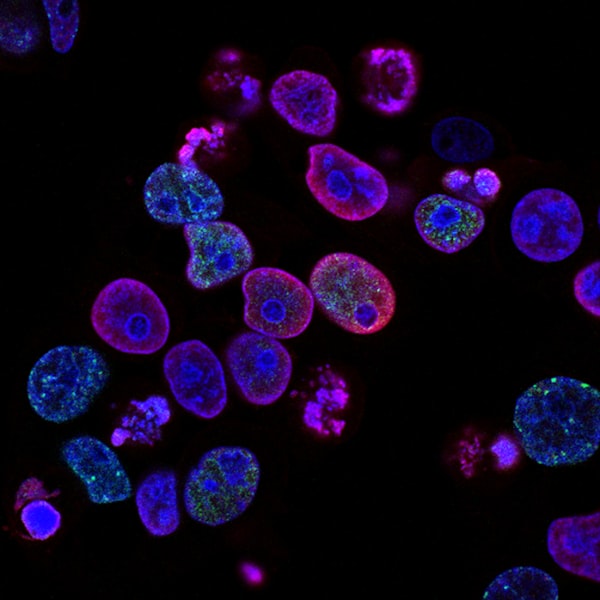
THC blood tests are required after a positive roadside saliva swab
The pharmacology of THC presents a unique challenge for road traffic law. Unlike alcohol, which is metabolised at a relatively constant rate, THC is lipophilic and distributes into body fat before being slowly released back into the bloodstream. This process is governed by the elimination constant k in the formula for drug concentration over time: C(t) = C₀e⁻ᵏᵗ
For medical patients who consume THC regularly, the steady-state concentration often remains above the 2µg/L threshold long after any cognitive impairment has dissipated. Research published in the journal Addiction in 2025 proposed a "unit-based" approach to monitoring consumption, suggesting a limit of 8 THC units per week to minimise the risk of Cannabis Use Disorder.
Critically, clinicians advise that the window of impairment typically lasts four hours or less, but residual THC can be detected in the blood for weeks in regular users — creating a profound mismatch between the legal limit and actual driving safety.
Roadside Enforcement Technology (2026)
The 2026 enforcement landscape utilises several "Type Approved" devices for roadside screening. Currently, the most common instruments include the Drager DrugTest 5000 and the Securetec Saliva DrugWipe S. These devices detect recent consumption of cannabis and cocaine, which together account for roughly 83% of drug-driving offences.
Critical limitation: Roadside swabs cannot distinguish between a patient following a legal prescription and a recreational user who is impaired. Where a patient can provide proof of prescription and shows no articulable signs of impairment, officers should consider "No Further Action" (NFA) rather than a formal arrest.
International & Regional Variations: Jersey & Guernsey Models
The Crown Dependencies have taken diverging paths in 2026. Jersey's Infrastructure Minister, Constable Andy Jehan, has proposed raising the THC limit to 5µg/L specifically to accommodate medical users — a direct response to consultations with UK academics and the Faculty of Forensic and Legal Medicine.
However, Jersey's proposal has faced criticism for lacking an explicit statutory medical defence, unlike the laws in England, Wales, and Guernsey. In Guernsey, the 2µg/L limit remains, but is accompanied by robust guidance that recognises the rights of lawful patients.
In the United States, the reclassification of cannabis to Schedule III has begun to influence international norms, potentially opening the door for medical cannabis to be treated as a "reasonable accommodation" under disability laws — though zero-tolerance rules remain for safety-sensitive positions such as truck drivers and pilots, mirroring the stricter standards applied to HGV drivers in the UK.

Jersey Proposal: 5µg/L
2.5× higher than England & Wales, but lacks explicit medical defence
Forensic Reliability & the CBD "Hemp Loophole"
A critical 2025–2026 development involves the forensic testing of CBD and hemp products. A UK Crown Court case in July 2025 threw out criminal charges against CBD importers after ruling that police failed to follow mandatory testing protocols (EU Regulation 639/2014). The case highlighted that improper testing methods could lead to percentage differences in THC measurement of over 22% — catastrophic when measuring levels near the 2µg/L threshold for driving.
Business of Cannabis: Full CBD testing case reportPatient Responsibilities, DVLA Compliance & Practical Advice

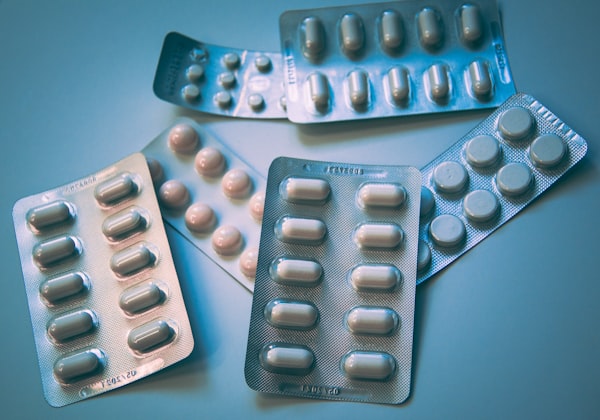
Original packaging with dispensing labels is key evidence
DVLA Notification Requirement
The DVLA requires drivers to notify them of any medical condition that may affect their ability to drive safely. While a medical cannabis prescription in itself may not always require notification, the underlying condition — such as epilepsy, multiple sclerosis, or severe chronic pain — frequently does. Failure to notify the DVLA can result in the suspension of a licence and a fine of up to £1,000.
Patient Responsibilities (2026 Guidance)
- Never drive if you feel impaired, regardless of the time since your last dose
- Follow the specific dosing instructions provided by your consultant
- Consult your doctor before driving if also taking benzodiazepines or opioids (additive effects)
- Keep your vehicle free of open containers of medical cannabis (open-container laws)
- Always carry your original prescription packaging with dispensing labels
If Stopped by Police — Step by Step
- 1Stay calm and polite — cooperate with basic instructions
- 2Immediately inform the officer you hold a valid medical cannabis prescription
- 3Provide original prescription packaging with dispensing label
- 4Present your Releaf Medical Cannabis Card or Cancard if you have one
- 5Do not consent to a Field Impairment Test without seeking legal advice if possible
- 6Contact a solicitor experienced in drug-driving law as soon as possible

Conclusion: A Shift Toward Medical Recognition
The developments of 2026 suggest that the "war on drugs" mindset is gradually being replaced by a more nuanced understanding of cannabis as a legitimate pharmaceutical treatment. The new national police guidance, combined with landmark judicial acquittals, has provided a clearer, more predictable framework for the 90,000+ medical patients in the UK.
However, the journey toward total legal clarity remains incomplete. Until roadside testing technology evolves to measure actual impairment rather than mere presence, patients will remain reliant on the "common sense" application of the statutory medical defence by frontline officers and the courts. The success of these reforms will be measured not by the guidance itself, but by the tangible reduction in wrongful arrests.
Share Your Experience as a Patient
Have you had a police encounter while using legal medical cannabis? Your story helps build the evidence base for patient rights reform.